A free cupping score sheet that follows the SCA protocol
Ten attributes, 6.00 to 10.00 in quarter points, defects subtracted at the end. One page, A4 and Letter, no email required.
Print one per sample per cupper. No attribution needed.
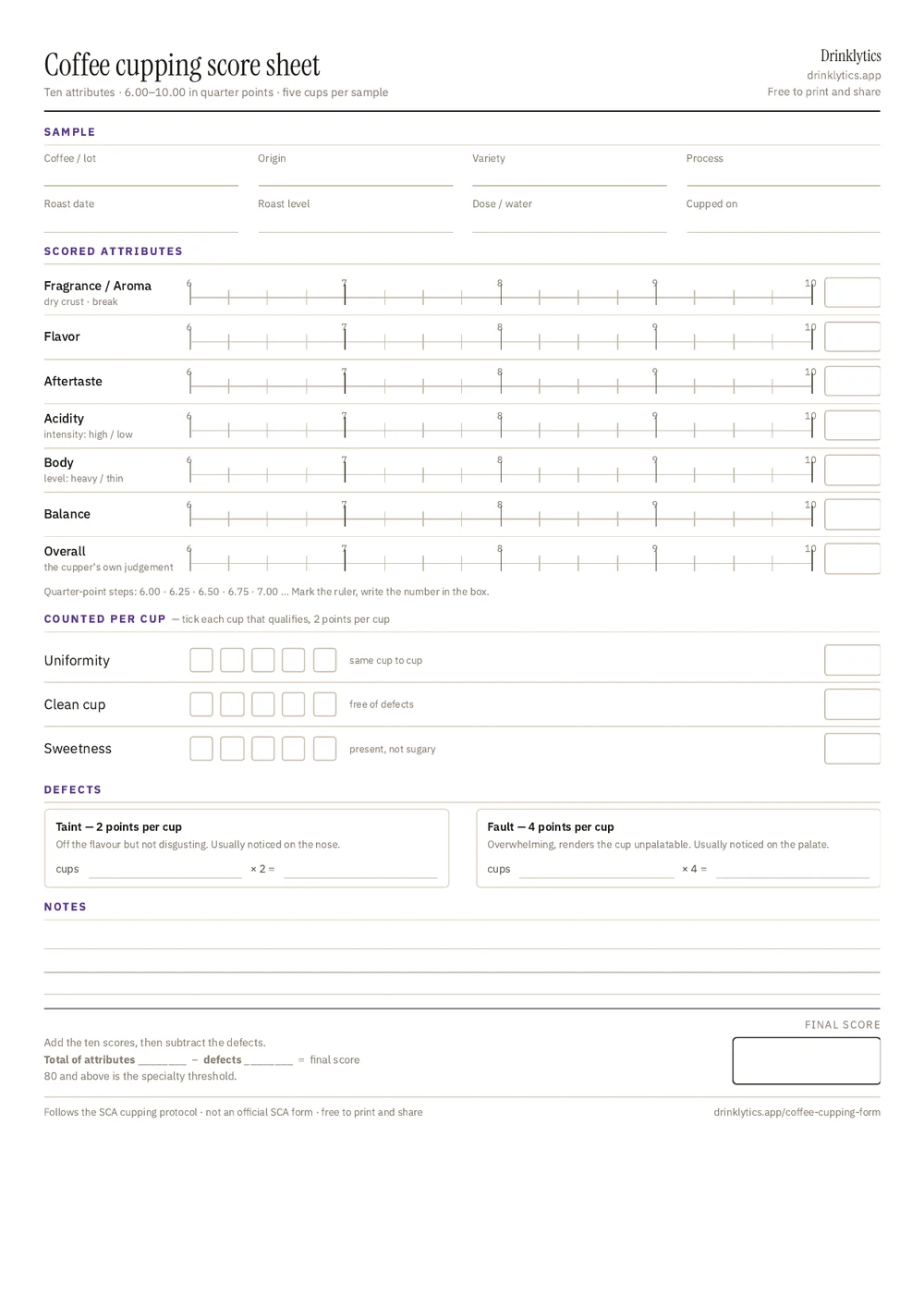
Ten attributes, 6.00 to 10.00 in quarter points, defects subtracted at the end. One page, A4 and Letter, no email required.
Print one per sample per cupper. No attribution needed.
A word on what this is. The cupping method and the 6–10 scale are published and widely used, and this sheet follows them. It is not an official Specialty Coffee Association document, it doesn't carry their mark, and it isn't a substitute for their form if you're submitting scores somewhere that requires one. It's a clean sheet for cupping on a Tuesday morning.
Fragrance/aroma, flavor, aftertaste, acidity, body, balance and overall. Each gets a 6-to-10 ruler marked in quarter points: mark the line, write the number in the box.
Uniformity, clean cup and sweetness. Five checkboxes each, two points per cup that qualifies. Ten points apiece when every cup is right.
Taints at two points per cup, faults at four, with the multiplication written on the sheet so nobody does it in their head at 8am.
Lot, origin, variety, process, roast date, roast level, dose and ratio. The fields you wish you'd written down when you compare notes a month later.
Three ruled lines for notes, which is usually where the useful part ends up anyway.
It fits on a single sheet in both A4 and Letter. No second page to lose, no double-sided printing to explain.
The scale runs 6.00 to 10.00, and every step is 0.25. It looks fussy until you cup four washed Ethiopians side by side and need to separate an 8.25 from an 8.50.
Add the ten attribute scores, subtract the defects, and the total is the final score. Eighty and above is the specialty threshold, the line the whole scale exists to draw.
No. It follows the same protocol, with the ten attributes, the 6 to 10 scale in quarter points and the defect maths, but it's laid out by me and carries no SCA mark or endorsement. If you need the official form, get it from the Specialty Coffee Association.
No. The link downloads the PDF straight away, with no form in the way.
Yes, including commercially. Print as many as you need. No credit required.
Five, which is what the three per-cup attributes assume, and why there are five checkboxes each. If you cup three, the sheet still works, you just cap those attributes lower.
No. This is the classic descriptive form. The SCA's newer affective and descriptive assessment is a different method with a different sheet, and mixing the two on one page would help nobody.
The sheet is a normal web page. Open the printable version, print from your browser, or save it and edit the HTML if you want your own header fields.
If you enjoy tasting coffee, you may also like Drinklytics, a coffee tasting journal app for keeping your own notes. Free on Android.